Good Food: A Tasty Font for Design
Choosing the right typeface is often the most critical decision in any design project. It sets the tone, communicates the brand personality, and guides the reader’s eye through the content. If you are looking for a typeface that balances modern cleanliness with a touch of playful warmth, Good Food might be exactly what your creative toolkit needs. This sans serif display family is designed to be versatile, delicious, and incredibly functional for a wide range of tasteful design projects.
Unlike rigid geometric fonts that can feel cold or overly corporate, Good Food brings a sense of approachability to the page. It is crafted to enhance the overall aesthetic of your work, whether you are designing a logo for a local bakery, creating packaging for an artisanal coffee brand, or laying out a lifestyle magazine. The font’s unique character helps designs stand out without screaming for attention, making it a reliable choice for professionals who value subtlety and impact in equal measure.
Why Versatility Matters in Display Typography
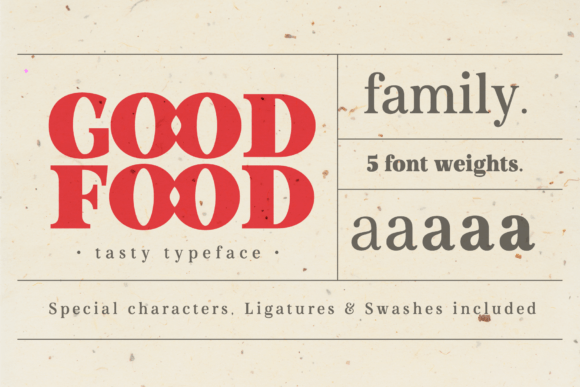
One of the biggest challenges designers face is finding a display font that works across different mediums. A typeface that looks stunning on a large poster might lose its charm when scaled down for a business card or mobile screen. Good Food addresses this issue by offering ultimate flexibility through its comprehensive structure. With a total of five different weights, this font family allows you to create clear visual hierarchies and maintain consistency across various platforms.
The range from Light to Bold gives you the freedom to experiment. You might use the lighter weights for elegant, airy subheadings that breathe well on a white background, while reserving the bolder weights for impactful headlines that need to grab immediate attention. This variety ensures that you do not need to switch fonts mid-project, which helps maintain a cohesive brand identity. For entrepreneurs and small business owners who may not have a dedicated design team, having a single font family that can handle multiple roles simplifies the creative process significantly.
Unlocking Creativity with Alternates and Ligatures
What truly sets Good Food apart from standard sans serif options is its inclusion of alternates and ligatures. These features are not just decorative extras; they are powerful tools for customization. Alternates allow you to swap specific characters for stylistic variations, giving your typography a fresh and unique look. For instance, you might choose a more rounded version of a letter to soften the tone of a headline, or a sharper variant to add a modern edge.
Ligatures, which are special characters formed by joining two or more letters, help improve the flow and readability of your text. In display typography, ligatures can also serve as distinctive design elements. By utilizing these features, you can bring a distinctive touch to headers, titles, and logos. This level of customization means that no two projects have to look the same, even if you are using the same base font. It empowers creators to inject their personal style into every piece of work, ensuring that the final output feels bespoke and carefully crafted.
Practical Applications for Creators and Businesses
The practical uses for Good Food are extensive. Here are a few scenarios where this font family shines:
- Branding and Logos: The clean lines and friendly curves make it ideal for brands that want to appear trustworthy yet approachable. Think organic food stores, wellness clinics, or creative agencies.
- Product Packaging: On shelves crowded with competitors, packaging needs to communicate quickly. The bold weights of Good Food ensure legibility from a distance, while the finer details reward closer inspection.
- Editorial Design: For bloggers and magazine editors, the font’s readability and stylistic range make it perfect for article titles, pull quotes, and section breaks. It adds visual interest without distracting from the main content.
- Digital Media: Whether it is a website header, a social media graphic, or an email newsletter, Good Food renders beautifully on screens. Its clarity ensures that your message is conveyed effectively across devices.
Important Considerations Before You Start
While Good Food is designed to be user-friendly, there are a few things to keep in mind to get the best results. First, consider the context of your project. Because it is a display typeface, it is most effective at larger sizes. Using the lightest weight for small body text might reduce readability, so it is often better to pair it with a simple, highly legible sans serif for long paragraphs.
Second, take time to explore the alternates and ligatures. Many beginners overlook these features, sticking to the default characters. However, spending a few minutes experimenting with different combinations can elevate your design from good to great. Most design software allows you to toggle these features easily, so do not be afraid to play around until you find the perfect combination for your headline.
Finally, think about color and spacing. Good Food’s open forms work well with generous letter spacing, which can add a sense of luxury and calm to your design. Pairing it with warm, earthy colors can enhance its "delicious" vibe, while high-contrast black and white combinations can highlight its modern structural integrity.
Making Your Designs Stand Out
In a world saturated with visual content, standing out requires more than just bright colors or flashy images. It requires thoughtful typography that resonates with your audience. Good Food offers the tools you need to create captivating and impactful designs that feel both professional and personal. Whether you are a seasoned designer looking for a new favorite font or a beginner eager to improve your visual communication skills, this font family provides the flexibility and charm necessary to bring your ideas to life.
By understanding the strengths of its five weights and leveraging the creative potential of its alternates and ligatures, you can transform ordinary layouts into extraordinary visual experiences. Remember, the goal is not just to fill space with text, but to communicate meaning and emotion. With Good Food, you have a partner in that creative journey, ready to help you craft designs that are not only seen but felt.