Slopperino: The Hand-Painted Font With a Secret
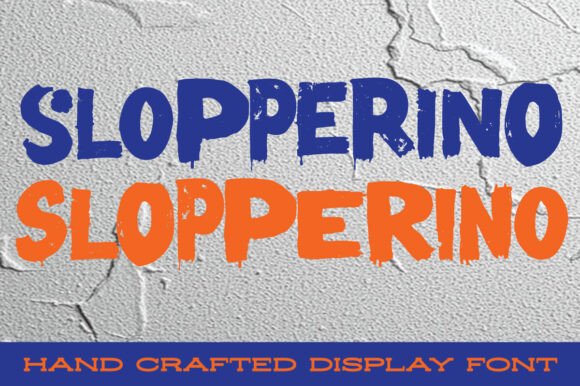
Most handwritten fonts follow a predictable pattern. They mimic the flow of a marker or brush, offering a casual vibe that works well for invitations or informal notes. But every so often, a typeface arrives that challenges the standard rules of modern typography. Slopperino is one of those rare finds. At first glance, it appears to be a bold, expressive display font with thick strokes and energetic curves. It demands attention. However, its true value lies in a hidden feature that most designers miss until they start typing: the lowercase characters are entirely different designs from the uppercase.
This isn’t just a stylistic alternate; it is a fundamental shift in how the font behaves. This dual-nature approach offers a second layer of creative expression, making Slopperino far more versatile than a typical script font or static sans serif font. For creatives who need their work to stand out without relying on complex illustration, this font provides an immediate, built-in dynamic edge.
Beyond the Brushstroke: Understanding the Visual Personality
To understand why Slopperino works, you have to look past the initial "messy" aesthetic. The font is hand-painted, which means every curve carries the weight and texture of a physical brush. This gives it an organic feel that digital vectors often struggle to replicate. It feels human. Yet, unlike many creative fonts that sacrifice legibility for style, Slopperino maintains a strong structural backbone.
The uppercase letters are bold and commanding. They work exceptionally well for short headlines where you need maximum impact. But when you switch to lowercase, the design shifts. These characters are not merely smaller versions of the capitals; they are distinct glyphs with their own personality. This creates a visual rhythm that keeps the reader’s eye moving. In editorial design, this variation prevents the text from feeling monotonous. It adds a playful bounce that feels intentional rather than accidental.
For brand strategists, this duality is a goldmine. A brand identity often struggles to balance professionalism with approachability. Slopperino manages both. The bold caps convey confidence and strength, while the unique lowercase forms add warmth and accessibility. It is a premium font that does not take itself too seriously, making it ideal for brands that want to appear established but not stiff.
Strategic Applications in Branding and Marketing
Where does Slopperino fit in a real-world project? Because it is a display font, it should not be used for long blocks of body text. Its strength lies in headlines, logos, and focal points. Here is how different professionals can leverage its unique characteristics:
- Logo Design: The contrast between upper and lowercase letters allows for interesting logotypes. You can mix cases to create a custom look without needing to manually adjust each glyph. It works particularly well for food trucks, craft breweries, and boutique studios.
- Packaging Design: On a shelf, products need to pop. Slopperino’s thick strokes read well from a distance. Use it for product names or key selling points on labels. The hand-painted texture suggests artisanal quality, which is crucial for organic or handmade goods.
- Social Media Graphics: In a feed dominated by clean, corporate aesthetics, a bold handwritten element stops the scroll. Use Slopperino for quote cards, event announcements, or sale banners. It adds a human touch that increases engagement.
- Web Design: While not suitable for paragraph text, it is perfect for hero sections and call-to-action buttons. It breaks up the grid of standard web design layouts, adding a layer of personality that keeps visitors interested.
When using Slopperino in commercial font projects, remember that less is often more. Let the font breathe. Give it plenty of white space so the intricate details of the hand-painted strokes can be appreciated. Crowding it with other busy elements will dilute its impact.
Mastering Font Pairings and Readability
One of the biggest challenges with expressive typefaces is finding a partner that complements rather than competes. Since Slopperino is heavy and textured, it pairs best with clean, neutral typefaces. A simple sans serif font with geometric proportions works beautifully for body copy. Think of fonts like Helvetica, Lato, or Open Sans. These provide a calm background that lets Slopperino shine as the star.
Avoid pairing it with another handwritten font or a decorative serif font. The visual noise will become overwhelming, and your message will get lost. The goal is contrast. If Slopperino is the loud, energetic voice, the pairing font should be the quiet, reliable narrator.
Readability is also a key consideration. Because the lowercase letters are unique designs, they may take a fraction of a second longer to process than standard glyphs. This is actually a benefit in advertising, as it forces the viewer to pause and look closer. However, for informational signage or quick-read contexts, ensure the size is large enough. Test your designs at various scales. What looks clear on a desktop monitor might become illegible on a mobile screen if the stroke width is too thin relative to the size.
Practical Tips for Implementation
- Evaluate Project Fit: Ask yourself if the project needs personality. If you are designing for a law firm or a medical journal, Slopperino is likely too playful. But for a creative agency, a music festival, or a lifestyle blog, it is perfect.
- Test Case Sensitivity: Experiment with all-caps versus mixed case. All-caps will give you a uniform, blocky look. Mixed case will reveal the font’s secret twist and add movement. Choose based on the energy you want to convey.
- Check Licensing: Always review the license agreement before using any design assets commercially. Ensure that the version of Slopperino you have includes rights for print, web, and merchandise if needed. Protecting your client and yourself is part of professional practice.
- Color Matters: Hand-painted fonts often look best in high-contrast combinations. Black on white is classic, but don’t be afraid to use vibrant colors. The texture of the brushstrokes can interact with color gradients in interesting ways, adding depth to flat designs.
In the end, Slopperino is more than just a set of letters. It is a tool for storytelling. It allows designers to inject humor, warmth, and energy into their work without spending hours on custom lettering. By understanding its dual nature and respecting its limitations, you can unlock its full potential. Whether you are crafting a logo design for a new startup or creating eye-catching social media graphics for an established brand, this font offers a fresh perspective. It reminds us that typography does not have to be rigid to be effective. Sometimes, the most powerful message is the one that feels like it was painted by hand, just for you.