Timbre Rose: Blending Hand-Drawn Artistry with Traditional Cultural Heritage in Modern Design
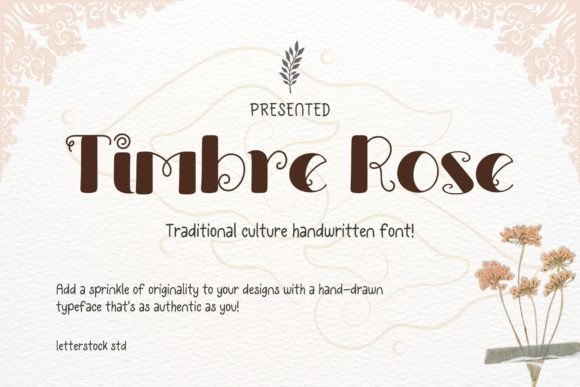
In the rapidly evolving landscape of digital typography, there is a growing appreciation for typefaces that carry a soul. While clean, geometric sans-serifs dominate the tech world, designers and brands are increasingly seeking fonts that evoke warmth, history, and human touch. Enter Timbre Rose, an original hand-drawn font inspired by traditional culture. This typeface is not merely a collection of letters; it is a bridge between the past and the present, offering a unique visual language for those who wish to infuse their projects with cultural richness and authentic craftsmanship.
For designers, marketers, and creative enthusiasts, understanding the value of a font like Timbre Rose requires looking beyond aesthetics. It involves recognizing how typography influences perception, storytelling, and brand identity. This article explores the essence of Timbre Rose, its significance in modern design, and how you can leverage its unique characteristics to create compelling visual narratives.
The Essence of Original Hand-Drawn Craftsmanship
At the heart of Timbre Rose lies the principle of original hand-drawn craftsmanship. In an era where most fonts are generated using precise mathematical algorithms and vector curves, Timbre Rose stands out because each character is meticulously crafted by hand. This process ensures that every letter retains the subtle imperfections and organic variations that define human artistry.
When you use a hand-drawn font, you are importing a sense of authenticity into your design. The strokes in Timbre Rose reflect the natural movement of the artist’s hand, capturing the rhythm and flow of traditional calligraphy and brushwork. This is particularly important for projects that aim to feel personal, artisanal, or rooted in heritage. Unlike sterile digital fonts, Timbre Rose invites the viewer to pause and appreciate the detail, creating a deeper emotional connection with the content.
Why Hand-Drawn Fonts Matter in a Digital World
You might wonder why a hand-drawn font is relevant in today’s high-tech environment. The answer lies in contrast and balance. As our screens become sharper and our interfaces more streamlined, there is a counter-movement toward designs that feel tactile and human. Timbre Rose serves this need by providing a visual texture that digital perfection often lacks. It reminds us that behind every brand and every message, there are human stories and cultural roots.
- Authenticity: Hand-drawn elements signal honesty and effort, qualities that consumers value in an age of mass production.
- Uniqueness: Since each character is individually crafted, the font avoids the repetitive uniformity of standard typefaces.
- Cultural Resonance: The style often echoes traditional art forms, making it ideal for projects celebrating heritage.
Immersing Designs in Traditional Culture Vibes
Timbre Rose is explicitly designed to reflect the essence of tradition. But what does "traditional culture vibes" mean in the context of typography? It refers to the visual cues that connect modern viewers with historical aesthetics. Whether it is the elegance of East Asian brush strokes, the intricate patterns of Middle Eastern calligraphy, or the rustic charm of European folk art, traditional culture carries a wealth of visual inspiration.
Timbre Rose synthesizes these influences into a cohesive typeface that feels both timeless and contemporary. By using this font, designers can immerse their audiences in a rich heritage without resorting to clichés or outdated motifs. It brings an air of cultural sophistication to projects, allowing them to speak to values of diversity, respect, and continuity.
Bridging the Gap Between Old and New
One of the most significant achievements of Timbre Rose is its ability to blend modern craftsmanship with timeless cultural vibes. It does not look like a relic from a museum; instead, it feels alive and relevant. This balance is crucial for modern branding, where companies want to honor their roots while appealing to contemporary audiences. The font achieves this by maintaining clean readability while incorporating stylistic flourishes that hint at traditional art forms.
For example, a modern coffee shop that sources beans from traditional farming communities might use Timbre Rose on its packaging. The font communicates the artisanal nature of the product and respects the cultural origins of the coffee, all while looking stylish on a minimalist label. This seamless integration is what makes Timbre Rose a versatile choice for a wide range of applications.
Practical Applications: From Posters to Branding
The versatility of Timbre Rose makes it suitable for diverse design projects. Its distinctive characters are not just decorative; they serve functional roles in communication. Here are some practical ways to incorporate this font into your work:
- Poster Design: Posters rely heavily on typography to grab attention and convey mood. Timbre Rose allows you to design posters that echo cultural narratives. Whether it is for a music festival, an art exhibition, or a community event, the font adds a layer of depth and intrigue that draws viewers in.
- Branding Materials: Your brand identity is more than just a logo; it is the sum of all visual interactions customers have with your business. Using Timbre Rose for business cards, letterheads, and packaging can help establish a brand presence that resonates with the values of timeless cultural heritage. It signals that your brand cares about quality, history, and authenticity.
- Social Media Graphics: In the crowded space of social media, standing out is essential. Quotes, announcements, and promotional graphics created with Timbre Rose can capture attention through their unique aesthetic, encouraging shares and engagement.
- Editorial Design: For magazines, blogs, or books focusing on culture, travel, or history, Timbre Rose can be used for headings and pull quotes to break up text and add visual interest.
Establishing a Brand Presence Rooted in Values
When you choose a font like Timbre Rose, you are making a statement about your brand’s values. It suggests that you prioritize diversity and tradition. In a globalized market, consumers are increasingly drawn to brands that demonstrate cultural awareness and respect. By celebrating tradition through typography, you align your brand with positive associations of wisdom, stability, and artistic integrity.
Consider a boutique hotel that emphasizes local experiences. Using Timbre Rose in their signage and marketing materials reinforces the idea that guests will experience something genuine and culturally immersive. It sets expectations before the guest even arrives, creating a cohesive narrative that enhances the overall customer experience.
Common Misunderstandings About Cultural Typography
While Timbre Rose offers many benefits, it is important to address some common misconceptions about using culturally inspired fonts. One frequent assumption is that such fonts are only suitable for niche or historical projects. However, as demonstrated by Timbre Rose, traditional aesthetics can be seamlessly integrated into modern, mainstream designs. The key is balance and context.
Another misunderstanding is that hand-drawn fonts are difficult to read. While highly decorative scripts can pose legibility challenges, Timbre Rose is designed with usability in mind. It maintains clear character structures, ensuring that the message remains accessible even as it delights the eye. Designers should always test readability in their specific context, but Timbre Rose strikes a thoughtful compromise between artistic expression and functional clarity.
Conclusion: Embracing Cultural Richness in Design
Timbre Rose represents more than just a new addition to your font library; it is an invitation to embark on a journey of cultural richness. By choosing a typeface that is meticulously hand-drawn and inspired by traditional culture, you elevate your designs from mere visuals to meaningful expressions. Whether you are crafting branding materials, designing posters, or creating digital content, Timbre Rose provides the tools to celebrate diversity and tradition.
In a world that often moves too fast, taking the time to appreciate and incorporate traditional craftsmanship into our work can be a powerful act. It connects us to our shared human heritage and reminds us of the beauty found in hand-made details. As you explore the possibilities of Timbre Rose, consider how it can help you tell stories that resonate deeply with your audience, establishing a brand presence that is both timeless and timely.
To learn more about how to integrate cultural elements into your design workflow, consider exploring resources on typography history and brand storytelling. By combining technical skill with cultural awareness, you can create work that is not only visually stunning but also intellectually and emotionally engaging.