Happy Shamrocks: Evaluating a Playful Display Font for Creative Projects
When selecting typography for a design project, the choice often hinges on balancing aesthetic appeal with functional readability. For designers, marketers, and hobbyists working on projects that require a sense of whimsy, Happy Shamrocks presents an intriguing option. This display font is characterized by its cheerful demeanor and bold structure, offering a distinct visual voice that differs significantly from standard sans-serif or serif typefaces. Understanding where this typeface fits within the broader landscape of digital design tools requires a close look at its specific attributes, ideal use cases, and limitations compared to more versatile alternatives.
Defining the Aesthetic and Character of Happy Shamrocks
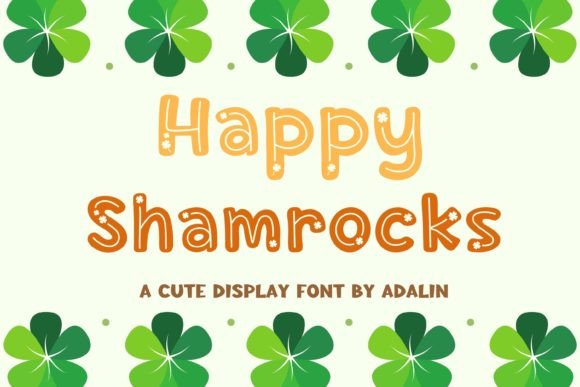
Happy Shamrocks is not designed to be invisible. Unlike body text fonts that aim to facilitate long-form reading without drawing attention to themselves, this typeface is built to stand out. Its letterforms are rounded, thick, and imbued with a hand-drawn quality that suggests informality and joy. The name itself hints at its primary association with luck, celebration, and lighthearted themes, but its application extends beyond seasonal holidays.
The font’s strength lies in its ability to convey personality instantly. In a market saturated with clean, minimalist geometric fonts, Happy Shamrocks offers a counterpoint that feels organic and approachable. It blends fun and style by maintaining consistent stroke widths while introducing subtle irregularities that mimic natural handwriting. This makes it particularly effective for designs that need to feel human-centric rather than corporate or sterile.
Comparing Display Fonts: When to Choose Personality Over Neutrality
To make an informed decision about using Happy Shamrocks, it is helpful to compare it against other categories of typography. Most designers maintain a toolkit that includes neutral workhorses—fonts like Helvetica, Roboto, or Open Sans. These are essential for user interfaces, lengthy articles, and professional documentation where clarity is paramount. However, they often lack emotional resonance.
On the other end of the spectrum are decorative script fonts, which offer elegance but can suffer from legibility issues at smaller sizes. Happy Shamrocks occupies a middle ground. It is more readable than complex scripts due to its upright posture and clear letter separation, yet it carries more emotional weight than neutral sans-serifs. When evaluating alternatives, consider the following distinctions:
- Versus Minimalist Sans-Serifs: If your goal is to convey trust, stability, or modernity, a clean sans-serif is usually the better choice. Happy Shamrocks may appear too casual for financial reports or legal documents.
- Versus Handwritten Scripts: Scripts often struggle with all-caps usage or short headlines. Happy Shamrocks maintains its charm and readability even when used in uppercase, making it more flexible for headlines and logos.
- Versus Other Novelty Fonts: Many novelty fonts sacrifice structure for gimmickry. Happy Shamrocks retains a solid underlying structure, ensuring that the text remains legible even when scaled down slightly for subheadings.
Practical Use Cases and Best-Fit Scenarios
Identifying the right context for Happy Shamrocks is crucial for maximizing its impact. Because it is a display font, it performs best when used sparingly and at larger sizes. Here are several scenarios where this typeface excels:
- Event Invitations and Greeting Cards: Whether for birthdays, baby showers, or St. Patrick’s Day celebrations, the font’s cheerful nature aligns perfectly with the tone of these materials. It creates an immediate sense of anticipation and fun.
- Children’s Educational Materials: Worksheets, book covers, and classroom decorations benefit from fonts that feel friendly and non-intimidating. Happy Shamrocks is engaging for young audiences without being difficult to read.
- Brand Identity for Lifestyle Businesses: Bakeries, toy stores, pet groomers, and craft shops often seek branding that feels approachable. Using this font for logos or packaging can help communicate a brand’s friendly values.
- Social Media Graphics: In the fast-scrolling environment of social media, visuals must grab attention quickly. Quotes, promotional banners, and story headers using Happy Shamrocks can stop the scroll by offering a burst of color and personality.
Limitations and Tradeoffs to Consider
No single font is suitable for every project, and Happy Shamrocks has clear limitations. Recognizing these tradeoffs helps prevent design missteps. The primary limitation is its lack of neutrality. If a design requires a serious, authoritative, or luxurious tone, this font will likely clash with the intended message. For example, using it for a law firm’s website or a high-end jewelry catalog would create cognitive dissonance for the viewer.
Additionally, as a display font, it is not optimized for body text. Long paragraphs set in Happy Shamrocks can cause eye fatigue due to the uniform thickness of the strokes and the playful shapes of the letters. It lacks the varied stroke contrast and open apertures found in fonts designed for extended reading. Therefore, it should always be paired with a more neutral typeface for supporting text.
Another consideration is cultural association. While the font is versatile, its name and stylistic cues strongly evoke Irish heritage and springtime festivities. Designers working on projects unrelated to these themes should ensure that the font’s playful vibe does not unintentionally narrow the perceived scope of their message. Contextual testing is essential to ensure the font supports rather than distracts from the core content.
Pairing Strategies for Balanced Design
To use Happy Shamrocks effectively, pairing it with complementary fonts is key. The goal is to let the display font shine while ensuring the rest of the design remains grounded. A common and effective strategy is to pair it with a clean, light-weight sans-serif. This contrast highlights the boldness of Happy Shamrocks while providing a quiet background for detailed information.
For example, if you are designing a poster for a community fair, you might use Happy Shamrocks for the main headline to capture attention and evoke excitement. Then, use a simple font like Lato or Arial for the date, time, and location details. This hierarchy ensures that the most important emotional cue is delivered first, while practical information remains easy to scan.
Avoid pairing it with other decorative or highly stylized fonts. Combining two strong personalities often results in visual clutter and reduces overall readability. The principle of "one hero font" applies here: let Happy Shamrocks be the star, and keep supporting elements subdued.
Making the Final Decision
Choosing Happy Shamrocks ultimately depends on the emotional goal of your project. If you need to inject warmth, energy, and a touch of whimsy into your design, this typeface is a strong candidate. It transforms ordinary layouts into something more engaging by adding a layer of visual interest that neutral fonts cannot provide.
However, if your project demands strict professionalism, high-volume text readability, or a minimalist aesthetic, you may need to explore other options. Always test the font in the actual medium where it will be used. Print it out, view it on different screens, and ask for feedback from your target audience. Does it convey the right mood? Is it legible at the intended size?
By understanding the specific strengths and boundaries of Happy Shamrocks, you can make a more informed decision. It is a tool that, when used with intention and restraint, can elevate creative concepts from ordinary to extraordinary. It invites designers to play with tone and texture, reminding us that typography is not just about communication, but also about connection. Whether you are refreshing a brand identity or creating a one-off invitation, considering the unique charm of this font can add that necessary magic touch to your bright ideas.