The Goeng: Evaluating a Playful All-Caps Font for High-Energy Design Projects
In the crowded landscape of digital typography, finding a typeface that balances personality with legibility is a common challenge for designers. The Goeng emerges as a distinct option in this space, offering an all-caps aesthetic that prioritizes energy and whimsy over traditional neutrality. For professionals working on branding, social media graphics, or event promotions, understanding where this font fits within the broader ecosystem of display typography is essential. It is not merely a decorative element but a strategic tool for conveying tone.
This article explores the characteristics of The Goeng, compares its utility against other typographic styles, and provides practical guidance on when to deploy it versus when to seek alternatives. By examining its strengths and limitations, you can make a more informed decision about whether this font aligns with your specific design goals.
Defining the Aesthetic: What Makes The Goeng Distinct?
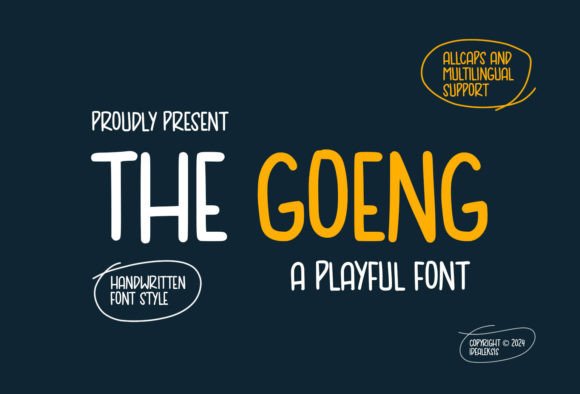
The Goeng is defined by its bold, lively characters and exclusive use of uppercase letters. Unlike serif fonts that convey tradition or sans-serifs that often aim for invisibility, The Goeng demands attention. Its structure is playful, with irregularities and stylistic flourishes that suggest movement and enthusiasm. This makes it particularly effective for headlines, titles, and short bursts of text where the primary goal is to capture immediate interest.
The "all caps" constraint is a significant design choice. By removing lowercase letters, the font creates a uniform block of text that feels solid and impactful. However, this also means that the rhythm of reading changes. There are no ascenders or descenders to guide the eye horizontally, which can reduce readability in longer passages. Therefore, The Goeng is best understood as a display font rather than a body text solution. Its value lies in its ability to infuse a sense of joy and creativity into static designs, making words pop with style.
Comparing Display Fonts: The Goeng vs. Traditional Alternatives
When evaluating typography, it is helpful to compare The Goeng against other common categories to understand its unique position. Most designers have access to standard geometric sans-serifs or classic slab serifs. Here is how The Goeng differs from these conventional choices:
- Geometric Sans-Serifs: Fonts like Futura or Avant Garde are clean, modern, and highly legible. They work well for corporate identities and tech products. In contrast, The Goeng sacrifices some of that clinical precision for character. If your project requires a sterile, professional look, The Goeng may feel too informal. However, if the goal is to humanize a brand or add warmth, The Goeng offers a distinct advantage.
- Handwritten Scripts: Script fonts often convey elegance or personal touch. While they are playful, they can sometimes suffer from legibility issues, especially at smaller sizes. The Goeng maintains the playfulness of a hand-drawn style but retains the structural integrity of block letters. This makes it more versatile for digital screens where clarity is paramount.
- Novelty Display Fonts: Many novelty fonts are overly themed, such as those mimicking chalk, neon, or vintage signage. These can quickly date a design or limit its application to specific niches. The Goeng strikes a balance; it is thematic enough to be fun but neutral enough in its construction to remain relevant across various casual contexts.
Understanding these distinctions helps clarify that The Goeng is not a replacement for foundational typefaces but a specialized tool for specific emotional impacts.
Ideal Use Cases: Where The Goeng Shines
To maximize the effectiveness of The Goeng, it is crucial to apply it in contexts that benefit from its energetic vibe. Here are several scenarios where this font excels:
- Event Promotions: Whether for music festivals, community gatherings, or pop-up shops, event posters need to convey excitement quickly. The bold nature of The Goeng ensures that key information stands out even from a distance.
- Social Media Graphics: In feeds dominated by visual noise, text overlays must be instantly readable and engaging. The Goeng’s whimsical style can stop the scroll, particularly when used for quotes, announcements, or celebratory messages.
- Children’s Products and Education: Brands targeting younger audiences often struggle to find typography that is fun without being childish. The Goeng offers a mature playfulness that appeals to both children and their parents, avoiding the cliché of comic-style fonts.
- Creative Headlines: In editorial design or blog headers, using The Goeng for main titles can break the monotony of standard web fonts. It signals to the reader that the content ahead is likely lighthearted, innovative, or unconventional.
In each of these cases, the font acts as a visual hook. It sets the tone before the user reads a single word of the actual content.
Limitations and Tradeoffs: When to Choose Another Option
While The Goeng has many strengths, it is not a universal solution. Recognizing its limitations is just as important as knowing its benefits. The primary tradeoff is readability. Because it is an all-caps font with a playful structure, it becomes difficult to read in long paragraphs. Using it for body text, legal disclaimers, or detailed instructions will likely frustrate users.
Additionally, the tone of The Goeng is inherently casual. It may not be suitable for industries that rely heavily on trust, authority, and seriousness, such as finance, law, or healthcare. In these sectors, a more traditional serif or a clean, neutral sans-serif is usually a safer choice. Deploying The Goeng in a formal annual report or a medical brochure could undermine the credibility of the message.
Another consideration is pairing. Because The Goeng is so dominant, it requires a subdued partner. Pairing it with another bold or decorative font will create visual chaos. Instead, it works best when contrasted with a simple, lightweight sans-serif for supporting text. This hierarchy ensures that the playful elements stand out without overwhelming the overall composition.
Practical Tips for Implementation
To get the most out of The Goeng, consider these practical implementation strategies:
Use Generous Spacing: All-caps fonts can appear dense. Increasing the letter-spacing (tracking) can improve legibility and give the design a more premium, airy feel. This is particularly effective in logos or short taglines.
Limit Word Count: Keep text blocks short. Ideally, use The Goeng for phrases under ten words. If you need to convey more information, switch to a complementary font for the secondary text.
Color Contrast: The bold strokes of The Goeng handle color well. Experiment with high-contrast combinations to enhance visibility. However, avoid overly complex backgrounds that might interfere with the intricate details of the characters.
Contextual Testing: Always test the font in its intended medium. What looks great on a large desktop monitor may lose impact on a mobile screen. Ensure that the playful details remain clear at smaller sizes.
Making the Final Decision
Choosing the right typography is a balancing act between aesthetics and function. The Goeng offers a compelling package for designers looking to inject energy and whimsy into their work. It stands out against sterile geometric fonts and overly complex scripts, providing a middle ground of approachable boldness.
If your project aims to evoke joy, creativity, or excitement, and if the text volume is low, The Goeng is likely an excellent fit. However, if you require high-density readability or a formal tone, it is advisable to explore more traditional alternatives. By understanding these nuances, you can leverage The Goeng effectively, ensuring that your designs not only look good but also communicate their intended message with clarity and impact.
Ultimately, the best font is the one that serves the content. The Goeng is a powerful tool in that arsenal, ready to make your words pop with style and enthusiasm when the moment calls for it.