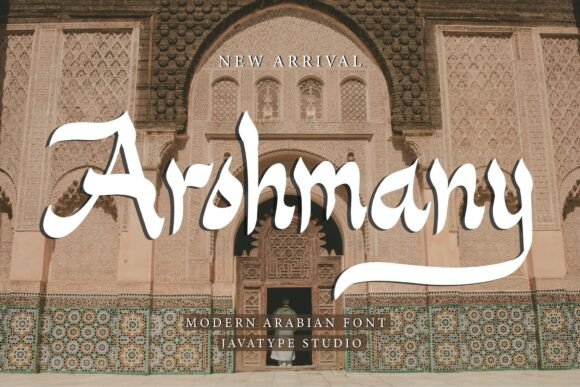
Arohmany: Evaluating an Arabic Calligraphy Font for Modern Design
Typography plays a pivotal role in visual communication, particularly when working with scripts that carry deep historical and artistic weight, such as Arabic. For designers seeking to bridge the gap between traditional calligraphic aesthetics and modern digital application, Arohmany presents a compelling option. This typeface is not merely a digitized version of standard handwriting; it is an exquisite Arabic font meticulously crafted with a calligraphy pen, resulting in a unique texture and flow that distinguishes it from geometric or purely mechanical sans-serif alternatives.
Understanding whether Arohmany aligns with your specific project requirements requires a closer look at its design philosophy, practical applications, and the tradeoffs inherent in using a display-oriented script. This evaluation aims to help designers, marketers, and content creators determine if this typeface serves their creative goals effectively.
The Design Philosophy: Tradition Meets Contemporary Style
Arohmany is defined by its ability to interweave classic Arabic characters with contemporary stylistic elements. The result is an elegant fusion of past and present. Unlike many digital fonts that strive for uniformity and perfect alignment, Arohmany retains the organic imperfections and fluid strokes characteristic of hand-lettering. This approach preserves the soul of traditional Arabic calligraphy while ensuring legibility and usability in modern media formats.
The font’s creation process, involving meticulous crafting with a calligraphy pen, ensures that each character carries a distinct weight and rhythm. For audiences familiar with Arabic script, this authenticity resonates deeply, conveying a sense of heritage and craftsmanship. For those less familiar with the script, the visual appeal lies in the intricate curves and balanced composition, which offer an exotic yet sophisticated aesthetic.
Ideal Use Cases and Creative Applications
One of the primary reasons designers consider Arohmany is its versatility within specific creative ventures. While it may not be suitable for long-form body text due to its decorative nature, it excels in contexts where visual impact is paramount. Below are several scenarios where Arohmany proves to be a strong fit:
- Eye-catching Banners and Headers: The bold strokes and distinctive style make it ideal for hero sections on websites or physical banners where immediate attention is required.
- Trendy Apparel and Merchandise: Fashion brands often seek typography that conveys cultural richness and artistic flair. Arohmany works well on t-shirts and hoodies, transforming simple garments into statement pieces.
- Photographic Captions and Social Media: When overlaying text on images, clarity and style are crucial. Arohmany provides enough contrast to stand out against complex backgrounds while adding an artistic layer to photographic compositions.
- YouTube Channels and Video Thumbnails: In the competitive landscape of video content, thumbnails must grab attention quickly. Using Arohmany for titles can differentiate a channel’s branding, suggesting a focus on culture, art, or lifestyle.
- Impactful Advertisements: For campaigns targeting demographics that value tradition and elegance, this font can enhance the emotional resonance of the message.
Benefits and Strategic Advantages
Choosing Arohmany offers several strategic benefits for brand identity and visual storytelling. First, it provides differentiation. In a market saturated with generic sans-serif fonts, Arohmany allows brands to establish a unique visual voice. Second, it fosters cultural connection. For businesses operating in the Middle East or targeting Arabic-speaking audiences, using a font that respects calligraphic traditions can build trust and affinity.
Furthermore, the font’s adaptability across various media—from digital screens to print materials—means that brands can maintain consistency in their visual identity. Whether used in a high-resolution magazine ad or a compressed social media post, the core aesthetic remains intact, ensuring recognizable branding.
Considerations and Potential Tradeoffs
While Arohmany offers significant aesthetic advantages, it is essential to approach its usage with an understanding of its limitations. As a display font, it is not designed for extensive reading. Using it for paragraphs, legal disclaimers, or detailed product descriptions would likely hinder readability and cause user fatigue. Designers must reserve Arohmany for headlines, short phrases, and logos.
Another consideration is pairing. Because Arohmany is highly stylized, it requires careful selection of complementary fonts. Pairing it with another decorative font can create visual clutter. Instead, it is best combined with clean, neutral sans-serif or serif typefaces that allow Arohmany to shine without competition. This balance ensures that the design remains professional and accessible.
Additionally, technical implementation matters. Ensure that the font file supports the necessary character sets for your target language variants. While Arohmany covers standard Arabic characters, verifying support for specific diacritics or regional variations is crucial for accurate linguistic representation.
When to Consider Alternatives
There are situations where Arohmany may not be the optimal choice. If your project prioritizes maximum legibility at small sizes, such as mobile app interfaces or data-heavy dashboards, a more geometric and simplified Arabic font would be more appropriate. Similarly, if the brand identity is strictly modernist, minimalist, or tech-focused, the ornate nature of Arohmany might clash with the desired corporate image.
Designers working on projects with tight budget constraints should also evaluate licensing terms. While many fonts offer free personal use, commercial projects often require specific licenses. Ensuring that the cost aligns with the project’s scope is a vital part of the decision-making process.
Making the Final Decision
To determine if Arohmany is the right tool for your design toolkit, ask yourself the following questions:
- Does my project require a touch of elegance and cultural depth?
- Is the text intended for short, impactful statements rather than long-form reading?
- Do I have a complementary font that can balance Arohmany’s decorative style?
- Does the target audience appreciate traditional artistic elements?
If the answer to these questions is yes, then immersing in the artful charm of Arohmany can significantly elevate your design. It allows your work to speak volumes, conveying sophistication and respect for artistic heritage. However, if your needs lean toward utility, minimalism, or high-density information display, exploring more functional typefaces may yield better results.
In conclusion, Arohmany stands out as a specialized tool for designers who value the intersection of tradition and modernity. By understanding its strengths and respecting its limitations, you can leverage this exquisite typeface to create compelling, memorable, and culturally resonant designs. Whether for a trendy t-shirt line or a sophisticated advertising campaign, Arohmany offers a distinct voice in the crowded world of digital typography.